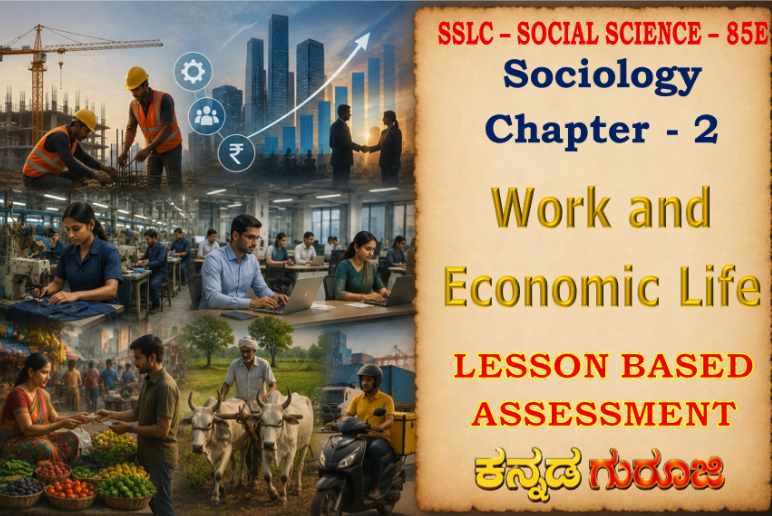
Work and Economic Life
Work is an essential part of human life. Every individual engages in some form of work to meet personal needs and contribute to society. Work not only helps in earning a livelihood but also promotes social and economic development.
Economic life involves production, distribution, and consumption of goods and services. Different occupations and professions require different skills and responsibilities. Modern society has witnessed significant changes in work patterns due to industrialization, urbanization, and technological development.
This chapter explains labour, division of labour, specialization, paid and unpaid labour, unemployment, and the conditions of organized and unorganized workers.
Labour
Labour refers to the physical or mental effort used in producing goods and services.
Labour is one of the most important factors of production and plays a key role in economic development.
Importance of Labour
- Increases production
- Supports economic growth
- Generates income
- Improves living standards
- Contributes to national development
Division of Labour
Division of labour means dividing work among different individuals according to their skills and abilities.
Advantages of Division of Labour
- Increases efficiency
- Improves productivity
- Saves time
- Develops expertise
- Reduces workload
Importance of Division of Labour
Modern industries and organizations depend on division of labour to improve production and efficiency.
Specialization
Specialization means acquiring expert knowledge or skill in a particular field of work.
Benefits of Specialization
- Higher productivity
- Better quality of work
- Increased efficiency
- Professional development
- Economic growth
Paid Labour
Paid labour refers to work performed in return for wages or salary.
Examples of Paid Labour
- Teachers
- Doctors
- Engineers
- Factory workers
- Government employees
Characteristics of Paid Labour
- Receives wages or salary
- Formal employment relationship
- Economic compensation for work
Unpaid Labour
Unpaid labour refers to work performed without receiving wages or monetary payment.
Examples of Unpaid Labour
- Mother's care and affection
- Household work
- Voluntary social service
- Work done for self-satisfaction
Importance of Unpaid Labour
Although unpaid labour does not generate direct income, it contributes significantly to family welfare and society.
Difference Between Paid and Unpaid Labour
| Paid Labour | Unpaid Labour |
| Wages or salary are received | No wages are received |
| Economic gain is involved | No direct economic gain |
| Formal employment | Informal or voluntary work |
| Example: Teacher, Doctor | Example: Mother's care, voluntary service |
Unemployment
Unemployment refers to a situation where a person who is willing and able to work is unable to find employment.
Causes of Unemployment
- Rapid population growth
- Lack of industries
- Lack of skills
- Technological changes
- Slow economic growth
- Inadequate employment opportunities
Effects of Unemployment
Unemployment is a serious social problem because it leads to:
- Poverty
- Economic hardship
- Social unrest
- Increased crime
- Mental stress
- Low standard of living
How Does Unemployment Affect Society?
Unemployment reduces income, increases dependency, and creates social and economic instability.
Measures to Eliminate Unemployment
Governments take several steps to reduce unemployment:
- Creating employment opportunities
- Promoting industrial development
- Encouraging self-employment
- Providing vocational education
- Skill development programmes
- Rural development schemes
How Can Unemployment Be Solved in a Highly Populated Country?
- Improve education and skills
- Encourage entrepreneurship
- Develop industries
- Increase investment
- Expand employment schemes
Organized Sector Workers
Organized sector workers are employees working in registered organizations that follow government rules and regulations.
Examples of Organized Workers
- Teachers
- Doctors
- Government employees
- Bank employees
- Insurance company workers
- Soldiers
Characteristics of Organized Sector Workers
- Regular salary
- Job security
- Fixed working hours
- Pension and retirement benefits
- Medical facilities
- Legal protection
Unorganized Sector Workers
Unorganized sector workers work in small or unregistered establishments without proper legal protection.
Examples of Unorganized Workers
- Agricultural labourers
- Daily wage workers
- Street vendors
- Domestic workers
- Construction labourers
Difference Between Organized and Unorganized Workers
| Organized Workers | Unorganized Workers |
| Job security available | No job security |
| Regular wages | Irregular wages |
| Legal protection available | Limited legal protection |
| Fixed working hours | Long and uncertain hours |
| Social security benefits | No social security benefits |
Challenges Faced by Unorganized Workers
Unorganized workers face several difficulties:
- Low wages
- Lack of job security
- Poor working conditions
- Absence of social security
- Long working hours
- Exploitation by employers
Discrimination in Employment
Employment discrimination occurs when people are treated unfairly in workplaces based on:
- Gender
- Caste
- Religion
- Region
- Economic background
Equal Wages Act – 1976
The Equal Wages Act, 1976 was enacted to ensure equal wages for equal work and prevent discrimination in employment.
Important Questions for LBA Preparation
1 Mark Questions
✔ What is labour?
✔ What is division of labour?
✔ What is specialization?
✔ What is paid labour?
✔ What is unpaid labour?
✔ What is unemployment?
✔ When was the Equal Wages Act enacted?
✔ Why was the Equal Wages Act enacted?
2–3 Mark Questions
Differentiate between paid and unpaid labour.
Paid labour receives wages while unpaid labour does not receive monetary payment.
What are the causes of unemployment?
Population growth, lack of industries, lack of skills, and inadequate employment opportunities.
Explain the differences between organized and unorganized workers.
Organized workers enjoy job security and legal protection, whereas unorganized workers often lack these benefits.
Long Answer Questions
✔ Effects of unemployment on society
✔ Measures to eliminate unemployment
✔ Characteristics of organized sector workers
✔ Challenges faced by unorganized workers
✔ Nature of discrimination in employment
Conclusion
“Work and Economic Life” explains the importance of labour, division of labour, specialization, unemployment, and the conditions of organized and unorganized workers. Understanding these concepts helps students recognize the role of work in economic and social development.
This chapter is important for LBA preparation and board examinations.
