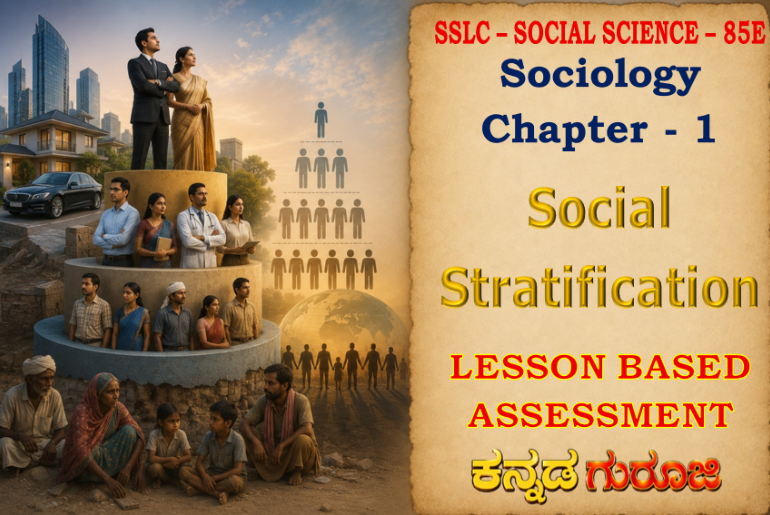
Social Stratification
Human society consists of different groups of people. These groups are often classified based on factors such as caste, class, occupation, wealth, education, religion, and social status. This classification creates differences among people and leads to social stratification.
Social stratification is a universal phenomenon found in every society. However, the basis of stratification varies from one society to another and changes over time. In India, the caste system has been one of the major forms of social stratification.
This chapter helps students understand social inequality, prejudice, untouchability, and the measures taken by the Constitution and government to eliminate discrimination and promote equality.
What is Social Stratification?
Social stratification is the division of society into different layers or groups based on social status, wealth, occupation, education, caste, or power.
Every society has different social groups, and these groups often enjoy different levels of opportunities, privileges, and responsibilities.
Characteristics of Social Stratification
- Found in all societies
- Creates social differences
- Based on social status
- Changes from time to time
- Varies from country to country
- Leads to social inequality
Social Inequality
Social inequality occurs when people do not enjoy equal opportunities, rights, or resources.
Causes of Social Inequality
- Caste system
- Economic differences
- Educational inequality
- Gender discrimination
- Religious differences
- Occupational differences
Effects of Social Inequality
- Social divisions
- Discrimination
- Poverty
- Lack of opportunities
- Social conflicts
- Backwardness of certain communities
Prejudice
Prejudice refers to a preconceived opinion or attitude towards a person or group without proper knowledge or understanding.
Prejudice often leads to discrimination and unfair treatment.
Examples of Prejudice
- Caste prejudice
- Religious prejudice
- Gender prejudice
- Economic prejudice
- Regional prejudice
Effects of Prejudice
- Social divisions
- Hatred among communities
- Lack of social harmony
- Discrimination against weaker sections
Untouchability
Untouchability is a social evil in which certain groups of people are considered inferior and are treated unfairly by society.
Untouchability violates human dignity and equality.
Mahatma Gandhi on Untouchability
Mahatma Gandhi described untouchability as a “stigma on Hindu society.”
Why is Untouchability a Social Evil?
Untouchability:
- Violates human rights
- Creates social inequality
- Promotes discrimination
- Damages national unity
- Prevents social progress
Constitutional Measures to Eradicate Untouchability
The Constitution of India guarantees equality and prohibits discrimination.
Article 17 of the Constitution
Article 17 abolishes untouchability and prohibits its practice in any form.
Importance of Article 17
- Eliminates untouchability
- Protects equality
- Promotes social justice
- Safeguards human dignity
Legislative Measures Against Untouchability
Untouchability (Offences) Act, 1955
The Government enacted the Untouchability (Offences) Act, 1955 to punish those practicing untouchability.
Protection of Civil Rights Act, 1976
In 1976, the Untouchability Offences Act was renamed as the Protection of Civil Rights Act.
Importance of the Act
- Punishes discrimination
- Protects civil rights
- Ensures equal treatment
- Promotes social equality
Measures Taken by India to Eradicate Untouchability
India has taken several steps:
- Constitutional safeguards
- Protection of Civil Rights Act
- Reservation policies
- Educational opportunities
- Social awareness programmes
- Welfare schemes for Scheduled Castes
How are the Rights of Scheduled Castes Protected?
The rights of Scheduled Castes are protected through:
- Constitutional provisions
- Legal protection
- Reservation facilities
- Educational assistance
- Government welfare programmes
Is Untouchability Decreasing in India?
In recent years, untouchability has decreased due to:
- Increased education
- Social awareness
- Urbanization
- Constitutional protection
- Government welfare programmes
- Media awareness campaigns
However, society must continue working towards complete equality and social justice.
Suggestions to Eradicate Untouchability
- Promote education for all
- Create social awareness
- Encourage equality and brotherhood
- Strict implementation of laws
- Remove caste discrimination
- Strengthen social justice programmes
- Promote human values and dignity
Important Questions for LBA Preparation
1 Mark Questions
✔ What is social stratification?
✔ What is prejudice?
✔ Which Article abolishes untouchability?
✔ Who said untouchability is a stigma on Hindu society?
✔ In which year was the Protection of Civil Rights Act enacted?
✔ In which year did the Untouchability Offences Act come into force?
✔ What is the significance of Article 17?
2–3 Mark Questions
How has social stratification emerged?
Social stratification emerged due to differences in caste, occupation, wealth, education, and social status among people.
How does social stratification differ from country to country?
The basis of stratification varies according to social, cultural, economic, and historical conditions of different countries.
What are the constitutional and legislative measures to eradicate untouchability?
Article 17, the Untouchability Offences Act (1955), and the Protection of Civil Rights Act (1976) are important measures.
Long Answer Questions
✔ Explain social stratification.
✔ Untouchability is a social evil – Explain.
✔ Measures taken to eradicate untouchability.
✔ How are the rights of Scheduled Castes protected in India?
✔ Suggestions to eliminate untouchability.
Conclusion
“Social Stratification” explains the divisions within society, the problems caused by inequality and prejudice, and the efforts made to eliminate untouchability. The Constitution and various laws play a vital role in promoting equality, dignity, and social justice.
This chapter is very important for LBA preparation and board examinations.
