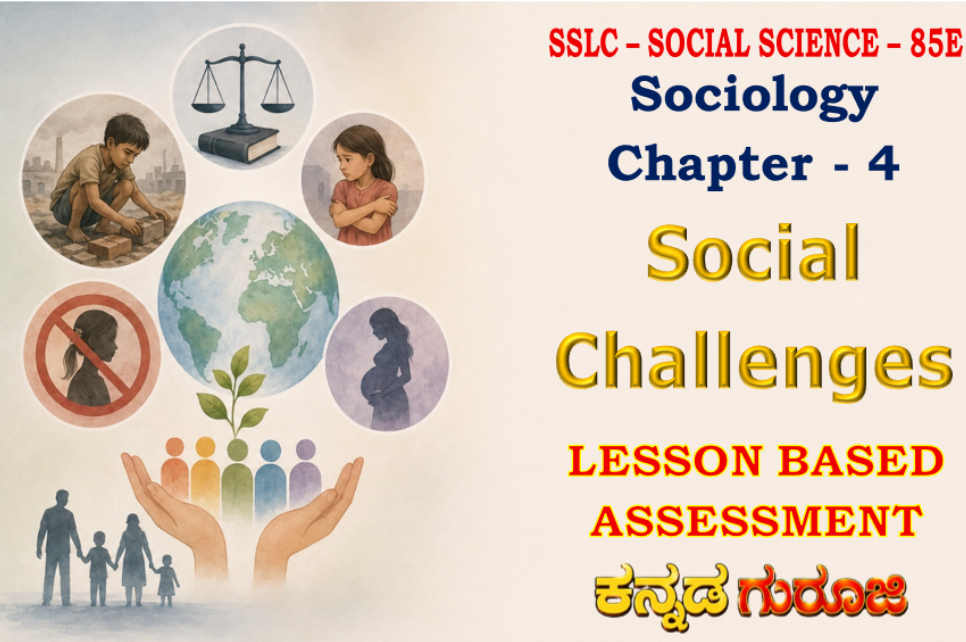
Social Challenges
India has made significant progress in education, technology, economy, and social development. However, several social problems continue to affect society and hinder national development. These problems include child labour, child marriage, dowry, female foeticide, and female infanticide.
Such social challenges violate human rights, affect equality, and create obstacles to social justice. The Constitution of India and various laws have been enacted to eliminate these problems and protect vulnerable groups, especially women and children.
This chapter explains the causes, effects, and remedial measures related to major social challenges faced by society.
Child Labour
Child labour refers to the employment of children in work that deprives them of education, health, and normal childhood development.
Constitutional Provision
Article 24 of the Indian Constitution prohibits employment of children below the age of 14 years in hazardous occupations.
Child Labour Prohibition and Regulation Act
The Child Labour (Prohibition and Regulation) Act was implemented in 1986 to prevent child labour.
Causes of Child Labour
- Poverty
- Illiteracy
- Unemployment of parents
- Large family size
- Lack of awareness
- Economic difficulties
Consequences of Child Labour
- Denial of education
- Physical and mental exploitation
- Poor health
- Loss of childhood
- Increased poverty cycle
- Reduced future opportunities
Measures to Eliminate Child Labour
- Providing free education
- Strict implementation of laws
- Poverty eradication programmes
- Public awareness campaigns
- Rehabilitation of child labourers
- Encouraging school enrolment
Right to Education Act – 2009
The Right to Education Act, 2009 provides free and compulsory education for children between 6 and 14 years of age.
Child Helpline
The child helpline number is 1098.
Programme for Child Labourers in Karnataka
The programme introduced to enroll child labourers into schools through Sarva Shiksha Abhiyan is “From Drudgery to School.”
Child Marriage
Child marriage refers to marriage involving individuals below the legally prescribed age.
Child Marriage Prohibition Act
The Prohibition of Child Marriage Act was enacted to prevent child marriages and protect children.
Causes of Child Marriage
- Poverty
- Illiteracy
- Traditional beliefs
- Gender discrimination
- Social pressure
- Lack of awareness
Ill Effects of Child Marriage
- Health problems
- Maternal and infant mortality
- Educational discontinuation
- Economic dependency
- Psychological stress
- Violation of child rights
Measures to Prevent Child Marriage
- Promoting education
- Public awareness programmes
- Strict enforcement of laws
- Empowerment of girls
- Community participation
- Reporting illegal marriages
How Can We Prevent Child Marriage?
Child marriage can be prevented through education, awareness, legal action, and social reform.
Dowry
Dowry refers to money, property, or valuable goods given by the bride’s family to the groom’s family during marriage.
Dowry Prohibition Act
The Dowry Prohibition Act was enacted by the Government of India in 1961.
Ill Effects of Dowry
- Financial burden on families
- Domestic violence
- Harassment of women
- Gender discrimination
- Family disputes
- Social injustice
Solutions to the Dowry Problem
- Strict implementation of laws
- Education and awareness
- Promoting gender equality
- Social reform movements
- Refusing dowry practices
- Community support programmes
How Can Dowry Be Eliminated?
Dowry can be eliminated through legal action, education, public awareness, and collective social responsibility.
Female Foeticide
Female foeticide refers to the illegal abortion of a female foetus before birth.
Prenatal Sex Testing (Prohibition) Act – 1994
The Prenatal Sex Testing (Prohibition) Act was enacted in 1994 to prevent sex determination and female foeticide.
Why Was This Act Implemented?
The Act was implemented to stop sex-selective abortions and protect the rights of girl children.
Causes of Female Foeticide
- Preference for male children
- Dowry system
- Gender discrimination
- Social customs
- Economic reasons
Ill Effects of Female Foeticide
- Declining sex ratio
- Gender imbalance
- Violation of human rights
- Social problems
- Discrimination against women
Female Infanticide
Female infanticide refers to the killing of a female child after birth.
Causes of Female Infanticide
- Gender discrimination
- Poverty
- Preference for sons
- Social customs
- Lack of awareness
Measures to Prevent Female Infanticide
- Education
- Gender equality awareness
- Legal protection
- Social reform programmes
- Women empowerment initiatives
Protection of Children from Sexual Offences (POCSO) Act
To protect children from sexual abuse, the Protection of Children from Sexual Offences (POCSO) Act was enacted in 2012.
Objective of POCSO Act
- Protect children from sexual abuse
- Ensure child safety
- Provide legal protection
- Punish offenders strictly
Important Questions for LBA Preparation
1 Mark Questions
✔ What is child labour?
✔ What is child marriage?
✔ What is female foeticide?
✔ What is female infanticide?
✔ What is the child helpline number?
✔ When was the Dowry Prohibition Act enacted?
✔ When was the Prenatal Sex Testing Prohibition Act enacted?
✔ Which Article prohibits child labour below 14 years?
2–3 Mark Questions
What are the causes of child labour?
Poverty, illiteracy, unemployment, large family size, and lack of awareness.
What are the consequences of child labour?
Loss of education, exploitation, poor health, and reduced opportunities.
What are the causes of female foeticide?
Male child preference, dowry system, and gender discrimination.
What are the ill effects of female foeticide?
Declining sex ratio, gender imbalance, and social problems.
Long Answer Questions
✔ Measures to eliminate child labour
✔ Causes of child marriage
✔ Ill effects of child marriage
✔ Measures to prevent child marriage
✔ Ill effects of dowry
✔ Solutions to the dowry problem
Conclusion
“Social Challenges” explains major social problems such as child labour, child marriage, dowry, female foeticide, and female infanticide. Through education, legal measures, awareness programmes, and social reform, these challenges can be reduced and a more just and equal society can be built.
This chapter is important for LBA preparation and board examinations.
