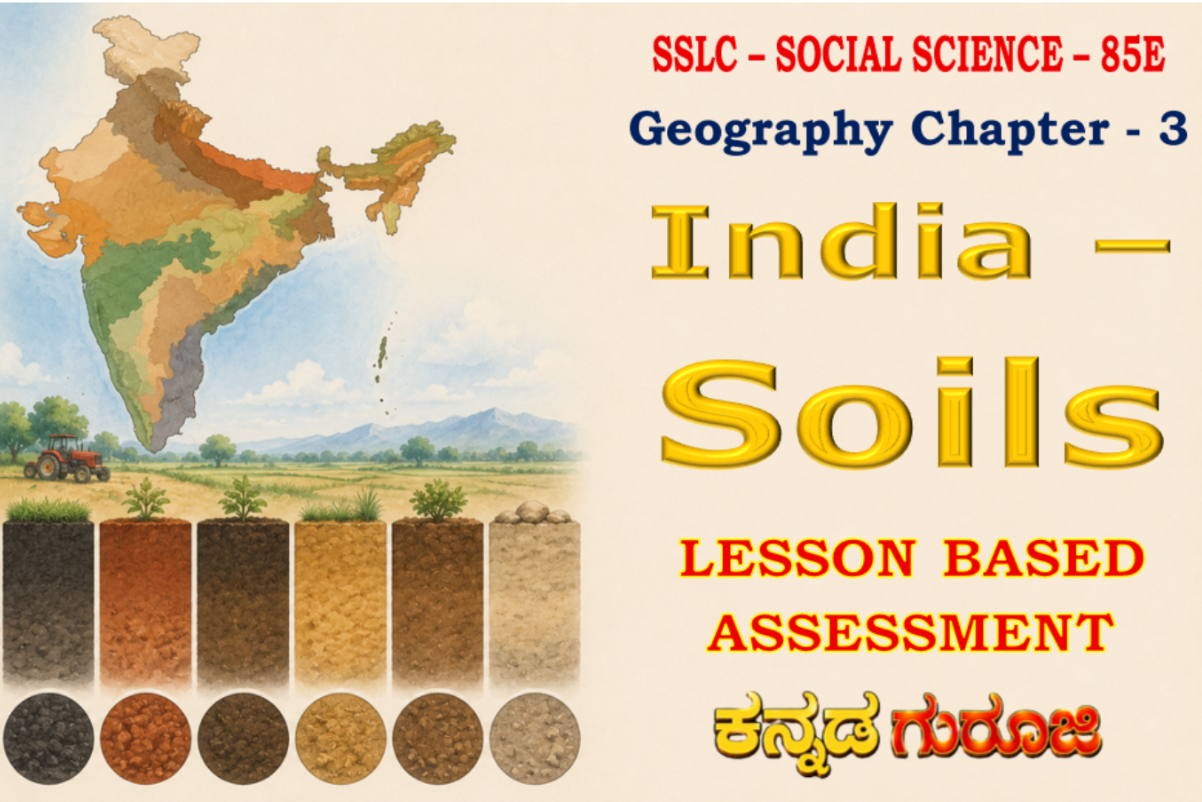
India – Soils
Soil is one of the most valuable natural resources of a country. It forms the foundation of agriculture and supports the growth of vegetation. India has a wide variety of soils due to differences in climate, rocks, relief, and vegetation.
The fertility and characteristics of soil determine the types of crops that can be cultivated in a region. Therefore, understanding different types of soils and their distribution is essential for agricultural development.
This chapter explains the major soils found in India, their characteristics, distribution, crops grown, causes of soil erosion, and methods of soil conservation.
What is Soil?
Soil is the uppermost layer of the earth’s crust formed by the weathering of rocks and the decomposition of organic matter.
It contains minerals, organic matter, water, and air, which are essential for plant growth.
Major Soils of India
The major soils found in India are:
- Alluvial Soil
- Black Soil
- Red Soil
- Laterite Soil
- Desert Soil
- Mountain Soil
Alluvial Soil
Alluvial soil is formed by the deposition of sediments carried by rivers.
Distribution
It is mainly found in:
- Northern Great Plains
- River valleys
- Delta regions
Characteristics
- Very fertile
- Rich in potash and lime
- Suitable for agriculture
- Easy to cultivate
Crops Grown
- Rice
- Wheat
- Sugarcane
- Jute
- Pulses
Importance
Alluvial soil is the most productive agricultural soil in India and supports a large population.
Black Soil
Black soil is also known as Regur Soil.
Distribution
Black soil is mainly found in:
- Maharashtra
- Madhya Pradesh
- Gujarat
- Telangana
- Parts of Karnataka
Characteristics
- Black in colour
- Rich in lime, iron, and magnesium
- High moisture retention capacity
- Develops cracks during summer
Why is Black Soil Called Black Cotton Soil?
Because it is highly suitable for cotton cultivation.
Why Does Black Soil Retain Moisture for a Long Time?
Its clayey texture helps it absorb and retain water for longer periods.
Crops Grown
- Cotton
- Sugarcane
- Wheat
- Groundnut
- Tobacco
Importance
Black soil is considered the most suitable soil for dry farming.
Red Soil
Red soil is one of the most extensively distributed soils in India.
Distribution
Found mainly in:
- Karnataka
- Tamil Nadu
- Andhra Pradesh
- Odisha
- Chhattisgarh
Characteristics
- Red colour due to iron oxide
- Porous and friable
- Low in nitrogen and humus
- Less fertile compared to alluvial soil
Crops Grown
- Millets
- Tobacco
- Groundnut
- Pulses
- Oilseeds
Importance
Red soil supports dry farming and cultivation of several commercial crops.
Laterite Soil
The word Laterite comes from the Latin word Later, meaning brick.
Formation
Laterite soil is formed due to intense leaching caused by heavy rainfall and high temperature.
Distribution
Mainly found in:
- Western Ghats
- Eastern Ghats
- Parts of Kerala
- Karnataka
- Tamil Nadu
Why is Laterite Soil Mostly Found in the Western Ghats?
Because the Western Ghats receive heavy rainfall, which causes intense leaching and laterite soil formation.
Why is Laterite Soil Red in Colour?
Due to the presence of iron oxide.
Characteristics
- Rich in iron and aluminium
- Poor in nitrogen and salts
- Less fertile
- Requires fertilizers
Crops Grown
- Tea
- Coffee
- Rubber
- Cashew
- Coconut
Rainfall Requirement
Laterite soil is commonly found in areas receiving more than 200 cm rainfall.
Desert Soil
Desert soil is mainly found in arid and semi-arid regions.
Distribution
- Rajasthan
- Gujarat
- Parts of Haryana and Punjab
Characteristics
- Sandy texture
- Low moisture content
- Poor fertility
- Rich in soluble salts
Crops Grown
With irrigation:
- Bajra
- Wheat
- Barley
- Pulses
Mountain Soil
Mountain soil is found in hilly and mountainous regions.
Distribution
- Himalayan region
- Northeastern states
- Hill slopes
Characteristics
- Rich in organic matter
- Contains humus
- Fertility varies with altitude
- Suitable for plantation crops
Crops Grown
- Tea
- Coffee
- Spices
- Fruits
Why is Decayed Organic Matter Found in Large Quantity?
Due to abundant vegetation and forest cover in mountain regions.
Soil Erosion
Soil erosion is the removal of the fertile top layer of soil by natural agents such as water and wind.
Causes of Soil Erosion
- Deforestation
- Overgrazing
- Heavy rainfall
- Floods
- Wind action
- Improper farming methods
- Mining activities
Effects of Soil Erosion
Soil erosion creates many problems:
- Loss of fertile topsoil
- Reduction in agricultural productivity
- Formation of gullies and ravines
- Decrease in groundwater recharge
- Desertification
- Siltation of rivers and reservoirs
- Reduction in reservoir storage capacity
Why is the Storage Capacity of Reservoirs Decreasing?
Because eroded soil gets deposited in reservoirs, reducing their water-holding capacity.
Soil Conservation
Soil conservation refers to protecting soil from erosion and maintaining its fertility.
Methods of Soil Conservation
- Afforestation
- Contour ploughing
- Terrace farming
- Check dams
- Shelter belts
- Controlled grazing
- Scientific agricultural practices
How Can We Prevent Soil Erosion?
- Plant more trees
- Avoid deforestation
- Adopt contour farming
- Construct check dams
- Prevent overgrazing
- Encourage soil conservation practices
Comparison Between Black Soil and Laterite Soil
| Black Soil | Laterite Soil |
| Rich in moisture | Poor moisture retention |
| Suitable for cotton | Suitable for tea and coffee |
| Clayey texture | Porous texture |
| Highly fertile | Less fertile |
Comparison Between Desert Soil and Alluvial Soil
| Desert Soil | Alluvial Soil |
| Sandy texture | Fine texture |
| Less fertile | Highly fertile |
| Low moisture | Good moisture retention |
| Found in arid regions | Found in river plains |
Important Questions for LBA Preparation
1 Mark Questions
✔ Why is black soil called black cotton soil?
✔ Why does black soil retain moisture for a long time?
✔ Why is laterite soil mostly found in the Western Ghats?
✔ What is soil erosion?
✔ What is soil conservation?
✔ How is laterite soil formed?
✔ Why is reservoir storage capacity decreasing?
2–3 Mark Questions
What are the causes of soil erosion?
Deforestation, overgrazing, floods, wind action, and improper farming methods.
What are the characteristics of mountain soil?
Rich in humus, fertile, and suitable for plantation crops.
Write a short note on red soil.
Red soil is rich in iron oxide, poor in nitrogen, and suitable for crops like millets, tobacco, and oilseeds.
Why is laterite soil red in colour?
Due to the presence of iron oxide.
Long Answer Questions
✔ What are the effects of soil erosion?
✔ Differentiate between black soil and laterite soil.
✔ Which are the major soils found in India?
✔ Differentiate between desert soil and alluvial soil.
✔ Explain the methods of soil conservation.
Conclusion
“India – Soils” explains the major soil types of India, their characteristics, distribution, and agricultural importance. It also highlights the causes and effects of soil erosion and the need for soil conservation. Understanding soils is essential for sustainable agriculture and environmental protection.
This chapter is very important for LBA preparation and board examinations.
