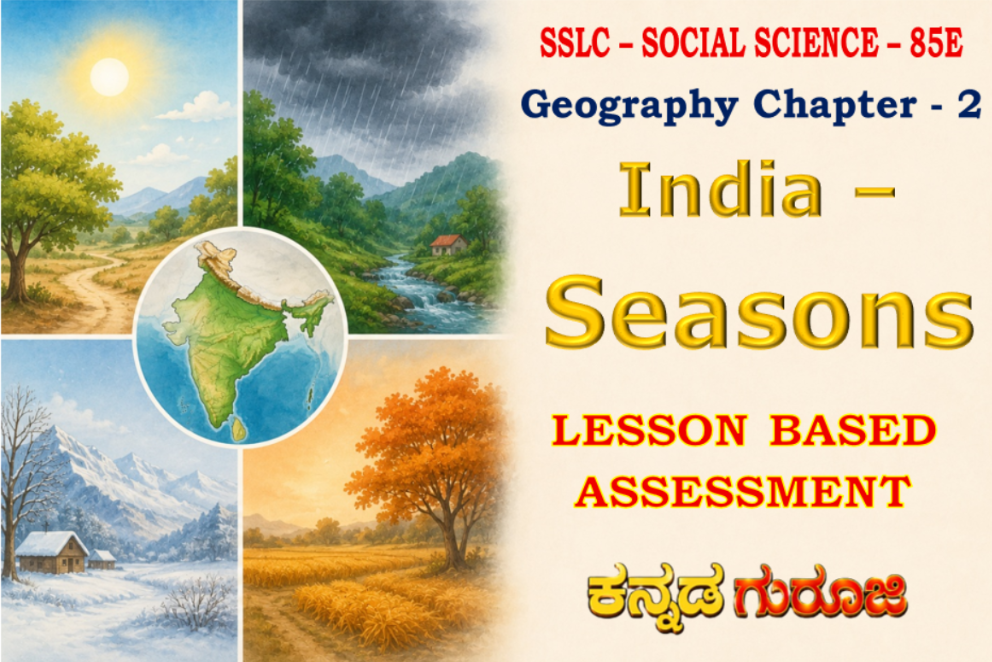
India – Seasons
India experiences a wide variety of climatic conditions due to its vast geographical extent, diverse relief features, and surrounding water bodies. The climate of India is generally described as a Tropical Monsoon Climate because the monsoon winds greatly influence rainfall and weather conditions throughout the year.
The seasonal changes in India affect agriculture, water resources, transportation, and the daily lives of people. Understanding the seasons and rainfall patterns helps us appreciate the importance of climate in national development.
This chapter explains the climatic seasons of India, factors influencing climate, monsoon winds, rainfall distribution, and their impact on Indian life.
Climate of India
Climate refers to the average weather conditions of a place over a long period of time.
India's climate is influenced by:
- Latitude
- Altitude
- Distance from the sea
- Relief features
- Monsoon winds
- Ocean currents
Main Climatic Seasons of India
India experiences four major climatic seasons:
- Summer Season
- Southwest Monsoon Season
- Retreating Monsoon Season
- Winter Season
Summer Season (March – May)
The summer season extends from March to May.
Characteristics of Summer Season
- High temperatures
- Dry weather
- Hot winds
- Low humidity
- Formation of low-pressure areas in northern India
Why is North India Extremely Hot During Summer?
North India experiences very high temperatures because:
- It is far away from the sea.
- Intense heating of land creates low pressure.
- Dry continental winds prevail.
Cooler Regions During Summer
Some regions remain comparatively cool during summer:
- Kashmir
- Himachal Pradesh
- Uttarakhand
- Hill stations of the Himalayas
Why is South India Cooler Than North India During Summer?
South India is surrounded by seas on three sides, which moderate temperature and reduce extreme heat.
Pre-Monsoon Rainfall
During April and May, local heating causes convectional rainfall in different parts of India.
Why Does Convectional Rainfall Occur?
Strong heating of the land causes warm air to rise, leading to the formation of clouds and rainfall.
Different Names of Pre-Monsoon Rainfall
West Bengal
Kala Baisakhi
Uttar Pradesh
Andhis
Kerala
Mango Showers
Karnataka
Coffee Blossoms
These rains are beneficial for agriculture and plantation crops.
Southwest Monsoon Season (June – September)
The Southwest Monsoon is the most important rainfall season in India.
Period
June to September
Branches of Southwest Monsoon
There are two branches:
- Arabian Sea Branch
- Bay of Bengal Branch
Importance of Southwest Monsoon
- Provides rainfall for agriculture
- Recharges rivers and reservoirs
- Supports hydroelectric power generation
- Maintains water supply
State That Receives Very Little Rainfall During Southwest Monsoon
Tamil Nadu receives comparatively less rainfall because it lies in the rain-shadow region of the Western Ghats.
Rainfall Distribution in India
Rainfall is not uniformly distributed across India.
Regions Receiving Heavy Rainfall
- Western coastal regions
- Western slopes of Western Ghats
- Northeastern states
- Meghalaya hills
Why Do Western Slopes of Western Ghats Receive Heavy Rainfall?
Moist monsoon winds from the Arabian Sea are forced to rise along the Western Ghats, causing orographic rainfall.
Highest Rainfall Receiving Place in India
Mawsynram in Meghalaya receives the highest rainfall in India and the world.
Regions Receiving Lowest Rainfall
- Thar Desert
- Western Rajasthan
- Ladakh region
Lowest Rainfall Region in India
The Thar Desert region of Rajasthan receives the least rainfall.
Retreating Monsoon Season (October – November)
The retreating monsoon season extends from October to November.
Why Do Southwest Monsoons Retreat?
- Land cools faster after summer.
- High-pressure areas develop over northern India.
- Winds begin to move from land towards the sea.
Cyclones During Retreating Monsoon
Cyclones occur in the Arabian Sea and Bay of Bengal due to differences in temperature and pressure between land and sea.
Effects of Cyclones
- Heavy rainfall
- Floods
- Damage to property
- Loss of life
- Disruption of transportation
Winter Season (December – February)
The winter season extends from December to February.
Characteristics
- Low temperatures
- Dry weather
- Cool winds
- Clear skies
Period of Lowest Rainfall
Winter season receives the least rainfall in India.
Temperature Extremes in India
Highest Recorded Temperature
Ruyli (Rui/Royli region in Rajasthan as per syllabus reference) is noted in the lesson for recording extremely high temperatures.
Hot Regions
- Rajasthan
- Ganganagar
- Interior northern plains
Importance of Monsoon to India
Monsoon plays a vital role in India's economy.
Why is Indian Agriculture Called a Gamble with Monsoon?
Because:
- Agriculture largely depends on rainfall.
- Failure of monsoon affects crop production.
- Droughts and floods influence farmers' income.
- Monsoon determines agricultural success.
Important Questions for LBA Preparation
1 Mark Questions
✔ What causes high temperature in North India during summer?
✔ Why does convectional rainfall occur during April and May?
✔ Name the cooler regions of India during summer.
✔ Which are the two branches of the Southwest Monsoon?
✔ Which state receives less rainfall during Southwest Monsoon?
✔ Which season receives the lowest rainfall in India?
✔ Why do western slopes of Western Ghats receive heavy rainfall?
✔ Which place receives the highest rainfall in India?
2–3 Mark Questions
Which are the major climatic seasons of India?
Summer, Southwest Monsoon, Retreating Monsoon, and Winter.
Which factors influence the climate of India?
Latitude, altitude, distance from sea, relief features, and monsoon winds.
Why do Southwest Monsoons retreat in October?
Due to cooling of land and development of high-pressure conditions over northern India.
Which regions receive heavy rainfall in India?
Western Ghats, Northeastern states, and coastal regions receive heavy rainfall.
Long Answer Questions
✔ Explain the climatic seasons of India.
✔ Explain the factors influencing the climate of India.
✔ Explain the causes of retreating monsoon.
✔ Why is Indian agriculture called a gamble with monsoon?
✔ Explain rainfall distribution in India.
Conclusion
“India – Seasons” explains the climatic conditions, rainfall patterns, and monsoon system of India. The monsoon is the backbone of Indian agriculture and plays a crucial role in the country's economy and environment.
This chapter is very important for LBA preparation and board examinations.
