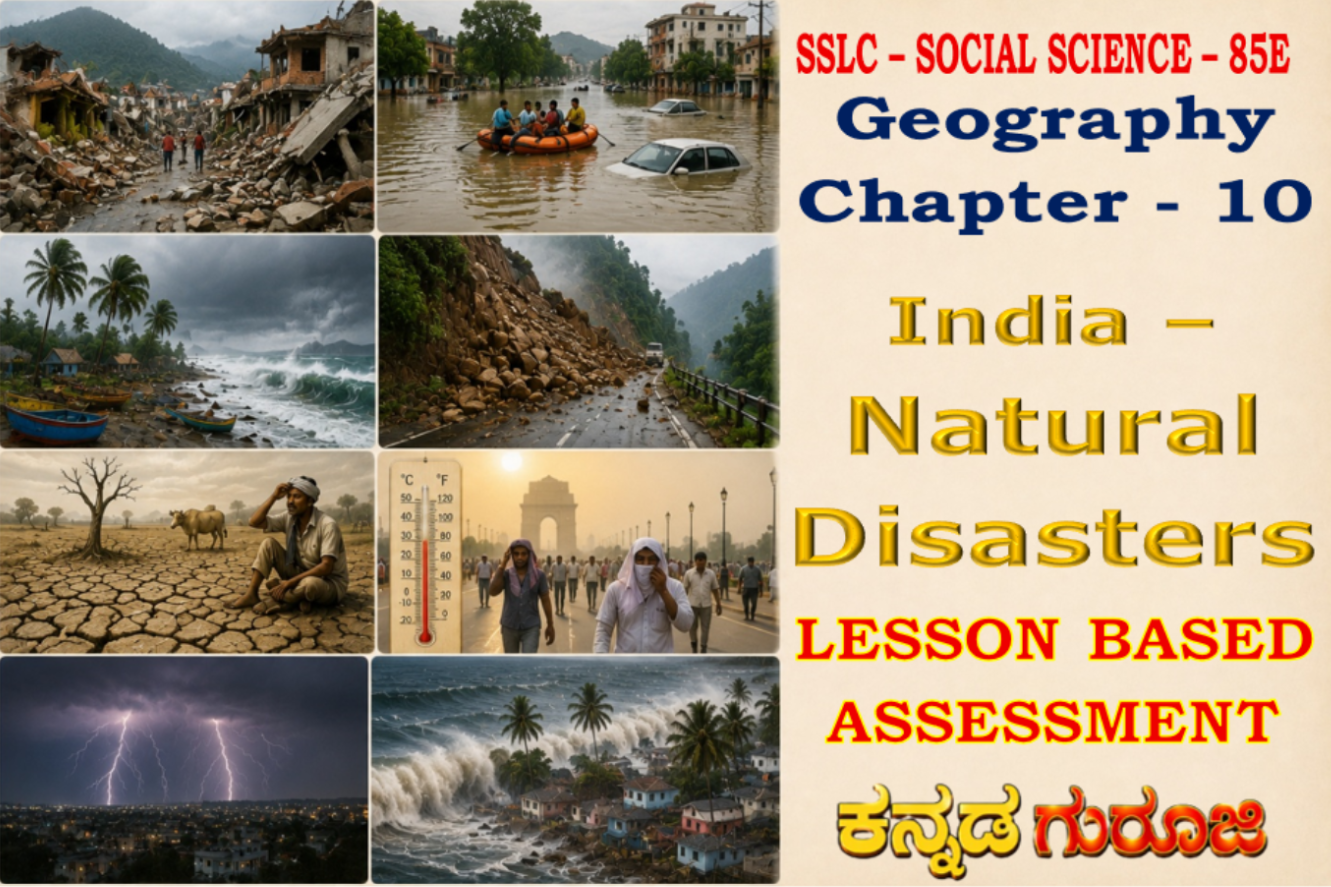
India – Natural Disasters
Natural disasters are sudden events caused by natural forces that result in loss of life, property, and environmental damage. India is highly vulnerable to various natural disasters because of its diverse physical features, climatic conditions, and geographical location.
Cyclones, floods, earthquakes, landslides, droughts, and coastal erosion are some of the major natural disasters affecting India. Effective disaster management and precautionary measures can help reduce the impact of these disasters.
This chapter explains the causes, effects, and preventive measures of major natural disasters in India.
What are Natural Disasters?
Natural disasters are sudden destructive events caused by natural processes that result in damage to life, property, and the environment.
Examples of Natural Disasters
- Cyclones
- Floods
- Earthquakes
- Landslides
- Coastal Erosion
- Droughts
- Tsunamis
Cyclones
A cyclone is a violent storm accompanied by strong winds, heavy rainfall, and low atmospheric pressure.
Main Reason for the Occurrence of Cyclones
Global warming is one of the important reasons for the increasing occurrence of cyclones, including in the Arabian Sea.
States Most Affected by Cyclones
- Odisha
- Andhra Pradesh
- West Bengal
- Tamil Nadu
- Gujarat
Causes of Cyclones
- Rise in sea surface temperature
- Low atmospheric pressure
- Global warming
- Moist air over oceans
- Climatic changes
Effects of Cyclones
- Loss of human lives
- Damage to houses and buildings
- Destruction of crops
- Damage to roads and communication networks
- Flooding in coastal areas
- Economic losses
- Displacement of people
Measures to Combat Cyclones
- Early warning systems
- Evacuation of people from vulnerable areas
- Construction of cyclone shelters
- Coastal afforestation
- Public awareness programmes
- Strengthening communication systems
- Effective disaster management planning
Floods
Floods occur when water overflows and submerges land that is normally dry.
Causes of Floods
- Heavy rainfall
- Overflowing rivers
- Cyclones and storms
- Deforestation
- Urbanization
- Poor drainage systems
- Human interference with river channels
Effects of Floods
- Loss of life and property
- Damage to crops
- Destruction of infrastructure
- Spread of diseases
- Soil erosion
- Displacement of people
- Economic losses
Flood Control Measures
- Afforestation
- Construction of dams and reservoirs
- Building embankments along rivers
- Proper drainage systems
- Flood forecasting and warning systems
- Protection of watershed areas
Why Should Forests Be Grown in Watershed Areas?
Forests help absorb rainwater and reduce the chances of floods.
Why Are Walls Built on Both Sides of Rivers?
To control floods and prevent river overflow into nearby lands.
Landslides
A landslide is the downward movement of rock, soil, or debris along a slope due to gravity.
Causes of Landslides
- Heavy rainfall
- Earthquakes
- Deforestation
- Mining activities
- Construction activities
- Steep slopes
- Weathering of rocks
Why Are Landslides Common in Mining Areas?
Mining weakens the stability of slopes and rocks, making landslides more likely.
Effects of Landslides
- Loss of life
- Destruction of houses
- Damage to roads and railways
- Disruption of transportation
- Damage to agricultural land
- Environmental degradation
Coastal Erosion
Coastal erosion is the wearing away of coastal land due to the action of sea waves, tides, and currents.
State Where Coastal Erosion Is Most Common
Kerala is one of the states where coastal erosion is most common.
Why Is Coastal Erosion More Common on the Western Coast?
Because of stronger wave action, monsoon winds, and ocean currents along the western coast.
Effects of Coastal Erosion
- Loss of coastal land
- Damage to settlements
- Destruction of roads and infrastructure
- Loss of agricultural land
- Threat to coastal ecosystems
Measures to Manage Coastal Erosion
- Growing mangrove forests
- Constructing seawalls
- Building groynes and breakwaters
- Coastal zone management
- Restricting unplanned development near coasts
Why Should Mangrove Forests Be Grown Along the Coast?
Mangrove forests reduce the impact of waves, prevent coastal erosion, and protect coastal ecosystems.
Type of Forest Grown to Control Coastal Erosion
Mangrove Forests are grown to control coastal erosion.
Earthquakes
An earthquake is the sudden shaking of the Earth's crust caused by the release of energy within the Earth.
Causes of Earthquakes
- Movement of tectonic plates
- Volcanic activities
- Faulting and folding
- Geological disturbances
- Human-induced activities in some cases
Effects of Earthquakes
- Loss of life
- Collapse of buildings
- Damage to roads and bridges
- Disruption of communication systems
- Landslides
- Fires and secondary hazards
- Economic losses
Precautionary Measures for Earthquakes
- Construct earthquake-resistant buildings
- Follow building safety regulations
- Avoid overcrowded structures during tremors
- Stay away from electric lines
- Keep emergency kits ready
- Create public awareness about disaster preparedness
Human Activities and Natural Disasters
Human activities often increase the severity of disasters.
Human Activities Causing Floods and Landslides
- Deforestation
- Excessive mining
- Encroachment of riverbeds
- Unplanned urbanization
- Quarrying activities
- Improper land use practices
Disaster Management
Disaster management refers to planning, preparedness, response, and recovery measures taken to reduce the impact of disasters.
Measures During Natural Disasters
- Follow official warnings
- Move to safe locations
- Keep emergency supplies ready
- Avoid risky areas
- Cooperate with rescue teams
- Stay informed through reliable communication channels
Important Questions for LBA Preparation
1 Mark Questions
✔ What are natural disasters?
✔ What is a flood?
✔ What is a landslide?
✔ What is coastal erosion?
✔ What is an earthquake?
✔ What is the main reason for the occurrence of cyclones?
✔ Why are landslides common in mining areas?
✔ Why should mangrove forests be grown along the coast?
2–3 Mark Questions
List the flood control measures.
- Afforestation
- Dams and reservoirs
- Embankments
- Proper drainage
- Flood forecasting systems
What are the effects of landslides?
Loss of life, damage to infrastructure, transportation disruption, and environmental degradation.
What are the effects of coastal erosion?
Loss of coastal land, infrastructure damage, agricultural loss, and ecosystem degradation.
List the causes of earthquakes.
Tectonic movements, volcanic activity, geological disturbances, and faulting.
Long Answer Questions
✔ What are the effects of cyclones?
✔ What measures can be taken to combat cyclones?
✔ What are the causes of floods?
✔ What are the causes of landslides?
✔ Write the effects of earthquakes.
✔ List the precautionary measures for earthquakes.
✔ Explain how human activities cause floods and landslides.
Conclusion
“India – Natural Disasters” explains the causes, effects, and management of cyclones, floods, landslides, coastal erosion, and earthquakes. Understanding disaster preparedness and adopting preventive measures are essential to reduce loss of life and property.
This chapter is very important for LBA preparation and board examinations.
