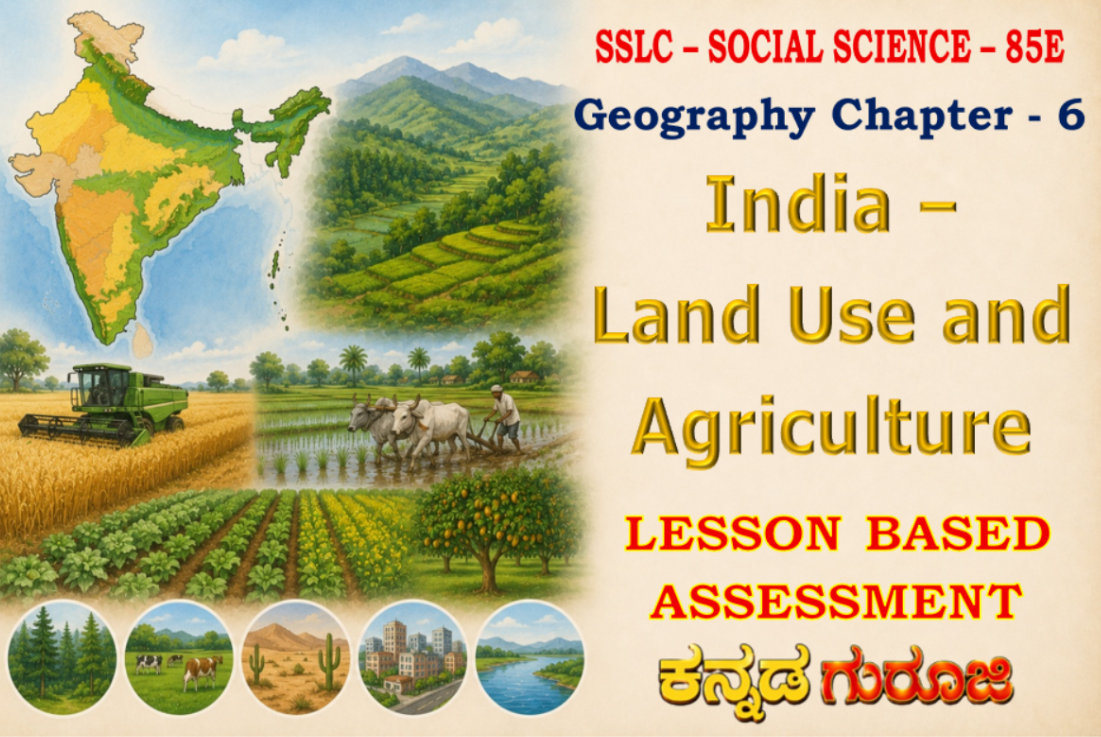
India – Land Use and Agriculture
India is primarily an agricultural country. Agriculture is the backbone of the Indian economy and provides livelihood to a large portion of the population. The country's diverse climate, fertile soils, and abundant water resources support a wide variety of agricultural activities.
Land is one of the most valuable resources for human development. The way land is utilized for agriculture, forests, industries, settlements, and transportation is known as land use. Understanding land use patterns and agricultural practices is essential for sustainable development and food security.
This chapter explains land use, types of agriculture, cropping seasons, major crops, horticulture, floriculture, and factors influencing agriculture in India.
Land Use
Land use refers to the utilization of land for various purposes such as agriculture, forestry, industries, transportation, and settlements.
Importance of Land Use
- Helps proper utilization of land resources
- Supports economic development
- Encourages agricultural growth
- Promotes environmental conservation
- Facilitates urban and industrial development
Factors Influencing Land Use
Land use is influenced by several physical and human factors.
Physical Factors
- Relief features
- Climate
- Soil
- Availability of water resources
Human Factors
- Population density
- Technology
- Economic development
- Government policies
- Urbanization and industrialization
Why Is Agricultural Land Becoming Uncultivated?
Land previously used for agriculture is now left uncultivated because of:
- Urbanization
- Industrial expansion
- Migration of rural population
- Water scarcity
- Soil degradation
Types of Land Use in India
Land in India is mainly used for:
- Agriculture
- Forests
- Grazing lands
- Fallow lands
- Barren lands
- Settlements
- Industries
- Transportation networks
Importance of Agriculture
Agriculture plays a significant role in India's economy.
Importance
- Provides food for the population
- Supplies raw materials to industries
- Generates employment
- Supports exports
- Contributes to national income
- Promotes rural development
Types of Agriculture in India
India practices different types of agriculture based on climate, land availability, and economic conditions.
1. Subsistence Farming
Subsistence farming is practiced mainly to meet the needs of the farmer and family.
Characteristics
- Small land holdings
- Traditional methods
- Low productivity
- Family labour
2. Intensive Farming
Intensive farming involves the use of more labour, fertilizers, and irrigation to increase production from limited land.
Characteristics
- High productivity
- Scientific methods
- Use of improved seeds
- Multiple cropping
3. Commercial Farming
Commercial farming is practiced mainly for market and profit purposes.
Characteristics
- Large-scale cultivation
- Modern technology
- Market-oriented production
- Higher investment
4. Mixed Farming
Mixed farming involves cultivation of crops along with livestock rearing.
Advantages
- Additional income
- Better utilization of resources
- Reduced risk of crop failure
5. Shifting Cultivation
Shifting cultivation is a method in which a piece of land is cultivated for a few years and then abandoned for another area.
This method has been discouraged and largely banned in modern times because it leads to deforestation and soil erosion.
Cropping Seasons in India
India has three major cropping seasons:
1. Kharif Season
- Sown: June–July
- Harvested: September–October
- Depends on monsoon rainfall
Major Kharif Crops
- Paddy
- Cotton
- Maize
- Jowar
- Groundnut
What is Kharif Cultivation?
The cultivation of crops during the monsoon season is called Kharif cultivation.
2. Rabi Season
- Sown: October–November
- Harvested: March–April
- Requires cool climate
Major Rabi Crops
- Wheat
- Gram
- Mustard
- Barley
What is Rabi Farming?
Cultivation carried out during the winter season is called Rabi farming.
3. Zaid Season
- Short season between Rabi and Kharif
- Cultivated during summer
Major Zaid Crops
- Watermelon
- Muskmelon
- Vegetables
Paddy Cultivation
Paddy is the most important food crop of India.
State Producing the Largest Quantity of Paddy
West Bengal is the leading producer of paddy in India.
Geographical Conditions Required
- Temperature: 20°C to 30°C
- Rainfall: More than 100 cm
- Fertile alluvial soil
- Abundant water supply
- Flat land
Why Does Paddy Require Flat Land?
Because paddy cultivation requires standing water, which can be easily retained on flat land.
Wheat Cultivation
Wheat is the second most important food crop in India.
Granary of Wheat
Punjab is known as the granary of wheat in India.
Geographical Conditions
- Cool climate during growth
- Moderate rainfall
- Fertile soil
- Irrigation facilities
Difference Between Paddy and Wheat Cultivation
| Paddy | Wheat |
| Kharif crop | Rabi crop |
| Requires more rainfall | Requires less rainfall |
| Needs standing water | Requires moderate irrigation |
| Grows in warm climate | Grows in cool climate |
Cotton Cultivation
Cotton is an important commercial crop.
Conditions Required
- Temperature between 21°C and 30°C
- Moderate rainfall
- Black soil
- Bright sunshine
- Long frost-free period
Major Cotton Producing States
- Maharashtra
- Gujarat
- Telangana
- Karnataka
- Punjab
Tobacco Cultivation
Tobacco is an important commercial crop.
Major Tobacco Marketing Centre in Karnataka
Mysuru is the major tobacco marketing centre of Karnataka.
Horticulture
Horticulture refers to the cultivation of fruits, vegetables, spices, plantation crops, and flowers.
Importance
- Generates higher income
- Creates employment opportunities
- Encourages exports
- Improves rural economy
Facilities Supporting Horticulture in India
- Favourable climate
- Fertile soils
- Irrigation facilities
- Government support
- Research institutions
- Transportation facilities
Floriculture
Floriculture is the cultivation of flowering plants for commercial purposes.
Importance
- Export earnings
- Employment generation
- Commercial farming opportunities
Golden Revolution
The rapid growth of horticulture and honey production in India is known as the Golden Revolution.
Factors Influencing Cropping Pattern in India
The cropping pattern of India is influenced by:
- Climate
- Soil
- Relief features
- Irrigation facilities
- Market demand
- Technology
- Government policies
- Availability of labour
Important Questions for LBA Preparation
1 Mark Questions
✔ What is land use?
✔ What is meant by Golden Revolution?
✔ What is floriculture?
✔ What is Rabi farming?
✔ What is intensive farming?
✔ What is subsistence farming?
✔ What is mixed farming?
✔ Why does paddy cultivation require flat land?
2–3 Mark Questions
Which are the cropping seasons in India?
Kharif, Rabi, and Zaid are the three cropping seasons.
How is paddy cultivation different from wheat cultivation?
Paddy requires more rainfall and is grown during Kharif season, whereas wheat requires less rainfall and is grown during Rabi season.
What climatic conditions are required for cotton cultivation?
Warm temperature, moderate rainfall, black soil, and bright sunshine are essential.
How has horticulture and floriculture helped Indian farmers?
They provide higher income, employment opportunities, and export earnings.
Long Answer Questions
✔ Land use is influenced by many factors. Justify.
✔ Which are the types of land use in India?
✔ Which are the major types of agriculture found in India?
✔ Explain the importance of agriculture.
✔ What are the factors that determine cropping pattern in India?
Conclusion
“India – Land Use and Agriculture” explains the utilization of land resources, different agricultural practices, cropping seasons, and major crops grown in India. Agriculture remains the backbone of India's economy and plays a crucial role in ensuring food security and rural development.
This chapter is very important for LBA preparation and board examinations.
